
Last updated: August 11, 2026
Backlink Exchange Network: What Actually Works, What Gets You Penalized, and How to Do It Safely
Zaid Hadi - CEO & Founder of repli
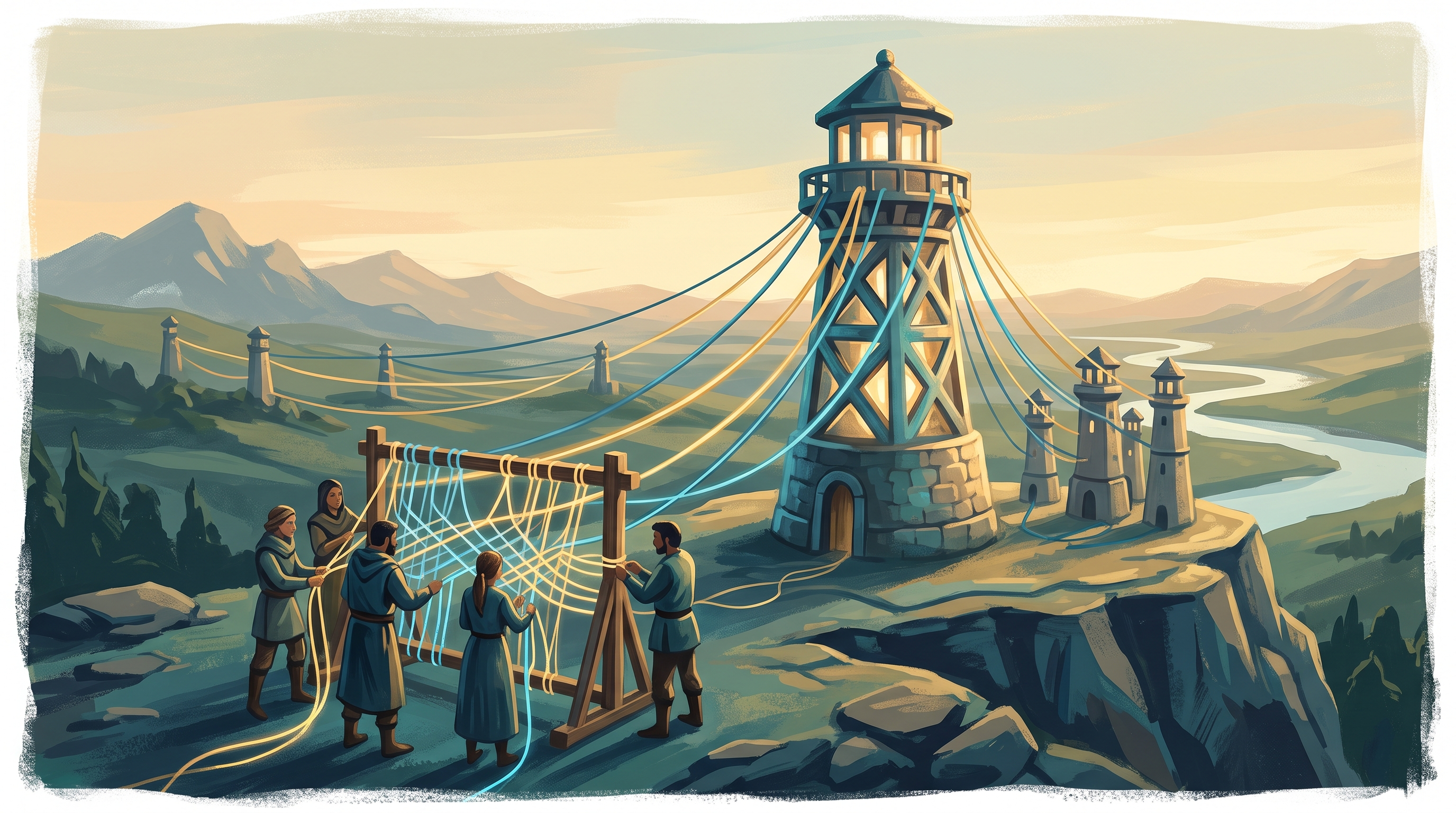
According to Ahrefs, the number one ranking page on Google has an average of 3.8x more backlinks than pages ranked two through ten. That makes link authority one of the clearest ranking signals in search. A backlink exchange network is one way to build that authority faster than cold outreach alone, but the approach is riddled with traps that can trigger Google penalties instead of rankings.
Table of Contents
- What Is a Backlink Exchange Network and How Does It Work?
- Reciprocal, Three-Way, and Network-Based Exchanges: Which Type Is Actually Safe?
- How to Evaluate Backlink Quality Before You Accept Any Link
- How Automated Platforms Handle Backlink Exchange Without the Risk
Key Takeaways
| Point | Details |
|---|---|
| Backlinks still drive rankings | Top-ranking pages average 3.8x more backlinks than lower positions. Authority is not optional. |
| Not all exchanges are equal | Three-way and network-based exchanges carry lower penalty risk than direct reciprocal linking. |
| Topical relevance outweighs volume | One link from a niche-relevant site outperforms dozens of off-topic placements. |
| Automated networks save time | Platforms with built-in relevance matching remove the manual shortcuts that cause most penalties. |
| Google targets schemes, not all exchanges | The line sits at manipulation versus genuine editorial value. |
A backlink exchange network is a system where websites agree to link to each other to build domain authority faster than manual outreach allows. Reciprocal two-way exchanges carry the highest penalty risk because Google's algorithms detect obvious A-links-to-B, B-links-to-A patterns. Three-way and network-based exchanges are safer because the link graph looks more natural to crawlers. Topical relevance matters more than volume, and automated platforms with quality controls reduce the most common failure points.
What Is a Backlink Exchange Network and How Does It Work?
A backlink exchange network is a structured system where website owners agree to place links on each other's sites to build domain authority and strengthen the ranking signals Google uses to determine search position. Here is how a typical network operates:
- You join the network and submit your site along with your niche, target keywords, and content topics.
- The network matches you with other sites that share topical relevance, ensuring the links make contextual sense.
- Links are placed on real pages with genuine content, not footers or sidebar widgets, so Google interprets them as editorial endorsements.
- You monitor results through Google Search Console, tracking which referring domains appear and how your authority metrics shift over time.
Google's PageRank algorithm still treats backlinks as one of its strongest authority signals. Links remain the currency of trust on the web. One condition where this changes: if your site already has strong topical authority and high domain rating, additional links from low-relevance exchange partners can dilute your backlink profile rather than strengthen it.
Early link exchanges were crude one-to-one swaps between unrelated sites. Modern networks use automated matching systems that evaluate niche alignment, domain quality, and content relevance before placing a single link.
Reciprocal, Three-Way, and Network-Based Exchanges: Which Type Is Actually Safe?
Link exchange type, quality controls, and scale determine penalty risk, not participation itself. Google's spam policies target manipulative patterns, not the concept of mutual linking.
- Reciprocal: Site A links to Site B, and Site B links back directly. This is the highest risk at scale because Google's link spam documentation explicitly flags excessive reciprocal linking as an unnatural pattern. A handful of organic reciprocal links between genuinely related sites is normal. Hundreds are not.
- Three-way: Site A links to Site B, while Site C links back to Site A. The indirect structure creates a lower algorithmic footprint. One condition where this changes: if all three sites share the same hosting, IP range, or ownership, the footprint becomes obvious.
- Network-based: A platform matches sites by niche relevance and domain authority, distributing links across many domains. This carries the lowest risk when quality controls are enforced because it mimics organic link distribution patterns.
Once you know which exchange type fits your risk tolerance, the next step is learning how to assess the individual links that network will place on your site.
How to Evaluate Backlink Quality Before You Accept Any Link
Evaluating backlink quality comes down to three signals: topical relevance, domain authority, and anchor text diversity. Miss any one of these and you risk accepting links that hurt more than they help.
- Topical relevance. Does the linking site cover the same or adjacent subject matter as yours? A link from a marketing blog to your SaaS product page carries weight. A link from an unrelated recipe site does not, and it raises flags.
- Domain authority. Links from low-authority, thin-content sites can dilute your standing rather than build it. One condition where this changes: in highly niche B2B categories, a low-authority but topically precise referring domain can outperform a high-authority generic mention.
- Anchor text diversity. Over-optimized exact-match anchors are a known Google spam signal. Natural variation across branded, partial-match, and generic anchors is safer and more sustainable.
- Link placement. Editorial links within body content outperform footer, sidebar, or author-bio links. Google weighs contextual placement more heavily because it signals genuine editorial endorsement.
Monitor your incoming link profile regularly through Google Search Console. It surfaces new referring domains, anchor text patterns, and potential toxic links before they compound into problems. Fifty links sharing one anchor from one source is exactly the kind of failure that automated platforms with quality controls are built to prevent.
How Automated Platforms Handle Backlink Exchange Without the Risk
Automated platforms reduce backlink exchange risk by enforcing quality filters, diversifying link sources, and removing the manual matching process entirely. That eliminates the most common failure point: human shortcuts.
Repli, an AI-powered automation platform for agencies and freelancers, connects your site to a smart backlink exchange network that applies these filters automatically, building credibility signals faster than manual outreach.
- Connectively (formerly HARO): Requires monitoring journalist queries daily and crafting custom pitches. Time cost is high; hit rate is low.
- Link Whisper: Automates internal linking suggestions but does not handle external backlink acquisition.
- Semrush and Ahrefs: Both audit your existing link profile and flag toxic backlinks, but neither automates earning new links.
One condition where this changes: if your site operates in a heavily regulated niche like finance or healthcare, automated matching alone may not satisfy the editorial trust signals those verticals demand. Manual relationship building with authoritative publications still matters there. For most founders and lean teams, automation handles volume and quality control while you focus on your product.
Summary
Three exchange models exist: reciprocal, three-way, and network-based. Reciprocal carries the highest penalty risk. Three-way exchanges reduce footprint detection. Network-based exchanges, when filtered for topical relevance and domain authority, deliver the strongest results with the lowest exposure.
Anchor text diversity, niche alignment, and editorial context determine whether a link builds authority or triggers a manual action. For founders who want domain authority built without cold outreach, Repli connects your site to a smart backlink exchange network on autopilot so you can stay focused on building your product.
For related reading on this site, see Automated Content Marketing: What It Actually Does and How to Make It Work for Your Site.
Frequently Asked Questions
What is a backlink exchange and is it safe for SEO?
A backlink exchange is an arrangement where two or more sites agree to link to each other to build domain authority. It is safe when done selectively with topically relevant, high-quality sites and unsafe when done at scale with irrelevant or low-quality domains. Google's guidelines do not prohibit all reciprocal linking, but they do target manipulative link schemes. Quality and relevance determine the line between legitimate networking and a penalty risk. If your site is brand new with no established topical authority, even a small number of poorly matched exchange links can set a damaging precedent before your profile has a chance to develop naturally.
Does Google penalize backlink exchanges?
Google penalizes excessive, manipulative link exchanges designed solely to inflate rankings, not every reciprocal link. The key distinction is pattern and intent. A handful of natural, editorially justified reciprocal links between relevant sites looks nothing like a network of hundreds of low-quality swaps. Even small-scale exchanges trigger scrutiny if every participating domain shares the same hosting footprint or ownership. Treat each exchange decision as an editorial one: would this link appear on this page if no agreement existed?
How do I join a backlink exchange network?
The safest way is through a platform that vets participating sites for domain relevance, authority, and content quality before matching partners. Repli connects users to a smart backlink exchange network that prioritizes credibility signals Google and AI platforms actually trust. Avoid open forums or spreadsheets where anyone can list a domain regardless of quality. Vetting matters more than volume.
What makes a backlink high quality?
A high-quality backlink comes from a topically relevant, editorially maintained site with real organic traffic and a clean link history. Domain authority alone is a misleading proxy. A lower-authority site in your exact niche often passes more ranking value than a high-authority general directory. Consistency of publishing, genuine editorial context, and a stable traffic pattern all signal legitimacy to both Google and AI search platforms.
Can backlink exchanges replace traditional link outreach?
Backlink exchanges complement outreach but do not fully replace it. Exchanges build baseline authority efficiently, especially for founders and lean teams without time for manual relationship building. Traditional outreach still wins for earning links from editorial publications and high-authority media sites that never participate in exchanges. The strongest link profiles combine both methods, balancing automated efficiency with selective, high-value manual placements. If your content targets highly competitive informational queries, editorial links from recognized publications carry disproportionate weight that no exchange network substitutes for at that level.
Sources referenced
External sources cited in this article for definitions, data points, or methodology.